
close
Choose Your Site
Global
Social Media
Views: 0 Author: Site Editor Publish Time: 2026-05-27 Origin: Site


Which welding method suits frame fabrication best: TIG or MIG? Choosing wrong can affect strength and appearance.
TIG offers precision and clean finishes, while MIG excels in speed and heavy-duty joints.
In this post, you’ll learn key differences and how to pick the right process for your project.
TIG welding, or Tungsten Inert Gas welding, uses a non-consumable tungsten electrode to create an electric arc. This arc melts the base metal, while an inert gas—usually argon—shields the weld area from contamination. Unlike MIG welding, TIG requires the welder to manually feed a filler rod into the weld pool as needed. This manual control allows for precise heat input and weld bead formation.The welder holds the torch in one hand and the filler rod in the other, adjusting the heat via a foot pedal or torch switch. This setup demands coordination but offers exceptional control over the weld quality. Because the tungsten electrode does not melt, the arc remains stable and focused, which makes TIG welding ideal for delicate or thin materials.
TIG welding excels on metals that require careful heat management or produce high-quality finishes. Common materials include:
Aluminum: TIG’s AC current breaks up the tough oxide layer, enabling clean fusion without burn-through.
Stainless Steel: Produces smooth, corrosion-resistant welds with minimal discoloration.
Titanium, Magnesium, Nickel Alloys: TIG handles these exotic metals well due to precise heat control.
Thin Gauge Metals: TIG’s low heat input prevents warping or distortion on thin sheets.
This versatility makes TIG popular in aerospace, medical devices, and automotive parts where weld integrity and appearance are critical.
Precision: Manual filler feeding and heat control enable tight, clean welds.
Clean Welds: Minimal spatter and slag reduce post-weld cleanup.
Heat Control: Narrow heat-affected zone (HAZ) minimizes distortion, preserving part dimensions.
Appearance: Produces aesthetically pleasing beads, often called a “stack of dimes.”
Material Flexibility: Works well on a wide range of metals, especially thin or exotic alloys.
These benefits make TIG welding the go-to choice when frame fabrication demands accuracy, strength, and a polished finish.
Skill Level: Requires steady hands and coordination to manage torch, filler rod, and heat simultaneously.
Slower Speed: Manual filler feeding slows the process compared to MIG welding.
Equipment Complexity: TIG setups often need advanced controls like foot pedals and high-purity shielding gases.
Fit-Up Sensitivity: Joints must be well-prepared and closely fitted to avoid defects.
Operator Fatigue: The precision and concentration needed can tire welders faster.
Because of these challenges, TIG welding is usually performed by experienced operators in specialized applications.
MIG welding, short for Metal Inert Gas welding, uses a continuously fed wire electrode that melts into the weld pool, joining base metals quickly and efficiently. The welding gun feeds this wire automatically while releasing a shielding gas—usually a mix of argon and CO2—to protect the molten metal from contaminants. This continuous wire feed allows welders to cover long seams without stopping, making MIG welding ideal for high-volume production.The process is straightforward: the wire acts as both the electrode and filler material. When the arc forms between the wire tip and base metal, the wire melts and fuses the parts. The shielding gas shields the weld pool from oxidation and impurities, ensuring a strong, clean joint.
MIG welding handles a broad range of metals, especially when speed and strength matter. Common materials include:
Carbon Steel: Most popular for structural frames and heavy fabrication.
Stainless Steel: Suitable for thicker sections where appearance is less critical.
Aluminum: Works well on thicker aluminum parts but requires special wire feeding equipment like spool guns due to wire softness.
Mild Steel: Often used in manufacturing machinery, equipment bases, and automotive frames.
MIG welding shines when working on materials thicker than 3mm, where its fast deposition rate and deep penetration maximize productivity.
High Welding Speed: Continuous wire feed lets welders complete long seams rapidly.
Ease of Use: Simpler to learn than TIG, making it suitable for less experienced operators.
Cost Efficiency: Faster welding reduces labor time and lowers production costs.
Strong Welds: Provides deep penetration, ideal for heavy structural joints.
Automation Friendly: Easily integrated into robotic welding systems for consistent, high-volume output.
These advantages make MIG welding the top choice for large-scale frame fabrication projects demanding speed and strength.
Spatter and Cleanup: MIG produces more spatter than TIG, often requiring grinding or finishing.
Heat Control: Less precise heat input can cause warping or distortion, especially on thinner materials.
Wire Feeding Issues: Aluminum wire feeding can be tricky without specialized equipment.
Joint Fit-Up Sensitivity: Poorly prepared joints may lead to defects like porosity or lack of fusion.
Skill Level: Easier to learn but still requires good torch control and parameter settings to ensure weld quality.
Despite these challenges, MIG welding remains accessible for many fabricators, balancing speed and quality effectively.

MIG welding speeds past TIG when it comes to productivity. Its continuous wire feed means welders can lay down long seams quickly without stopping. This makes MIG ideal for large frames or high-volume projects. Aluminum parts also get welded faster using MIG, especially when equipped with spool guns that handle the soft wire better.TIG welding moves slower. The welder must feed filler rod manually, which takes time and skill. While it’s perfect for precision work or thin metals, it’s not the best pick when speed is the priority.
TIG welding shines in heat control. The welder adjusts amperage and filler feed in real time, managing the weld puddle carefully. This precise control limits the heat-affected zone, reducing distortion and preserving tight tolerances on thin or exotic metals.MIG welding offers moderate heat control. The arc is stable but less adjustable during welding. This can cause more warping or burn-through on thin materials. Still, for thicker parts, MIG’s heat input is usually manageable.
Both processes produce strong welds when done right. MIG’s deep penetration suits thick structural joints, making it a favorite for heavy frames. However, fast MIG welds might leave residual stresses in complex shapes.TIG’s precise heat and filler control create smooth bead profiles with fewer discontinuities. This can boost fatigue resistance, especially in assemblies facing vibration or thermal cycling. TIG often edges out MIG in fatigue-critical applications.
MIG welding is simpler to set up and learn. Less operator time per part translates to lower labor costs. It’s easier for beginners and suits high-volume production.TIG welding demands skilled operators. Managing torch, filler rod, and heat simultaneously requires practice. Labor per part is higher, especially for detailed or complex welds. Equipment costs can also be steeper due to advanced controls and high-purity gases.
TIG welding produces clean, narrow beads with minimal spatter. The welds often look like neat “stacks of dimes,” needing little or no grinding. This makes TIG the go-to for visible welds or cosmetic frames.MIG welds tend to have more spatter and a raised bead. While automated setups can improve consistency, MIG welds usually require post-weld cleanup, especially if the finish is critical.
Tip: Choose TIG welding when your frame fabrication demands tight tolerances, minimal distortion, and a polished finish; opt for MIG welding to maximize speed and cost-efficiency on thicker, less visible components.
Aluminum welding demands special attention due to its unique properties. TIG welding excels on thin aluminum sheets because it uses AC current. This current helps break up the tough oxide layer on aluminum, allowing a clean, precise weld without burning through the material. The manual filler rod feeding lets welders control heat carefully, reducing distortion and producing smooth, attractive welds. This makes TIG ideal for aluminum frames where appearance and accuracy matter.MIG welding is better suited for thicker aluminum parts. It feeds wire continuously, speeding up the process and improving productivity on larger components. However, aluminum wire is soft and prone to feeding problems, so specialized equipment like spool guns is necessary. MIG welding also uses 100% argon gas to shield the weld. While MIG welds on aluminum can be strong, they often need more cleanup due to spatter and less precise heat control compared to TIG.
Stainless steel benefits from TIG welding's precise heat control and clean weld appearance. TIG produces corrosion-resistant, smooth beads with minimal discoloration, ideal for visible or hygienic applications. It also handles exotic alloys like titanium and nickel well, thanks to its focused heat input and contamination protection.MIG welding works efficiently on thicker stainless steel components where speed matters more than finish quality. It provides deep penetration for structural joints, but the welds may show more spatter and heat tinting. For exotic alloys, TIG is generally preferred unless production volume demands MIG.
TIG welding is the top choice for thin materials. Its precise heat control prevents burn-through and warping. It’s perfect for delicate parts or where tight tolerances are critical.MIG welding shines on thick materials. Continuous wire feeding deposits filler metal quickly, making it efficient for heavy frames and large assemblies. However, its broader heat-affected zone can cause distortion on thin parts.
Both TIG and MIG require clean surfaces for strong welds. TIG welding demands especially thorough cleaning because it’s sensitive to contamination. Aluminum must be free of oxide layers, often needing mechanical or chemical cleaning prior to welding.MIG welding tolerates minor surface contamination better but still requires removal of oils, rust, and dirt. For aluminum MIG, cleaning is critical to avoid porosity and feeding issues.Proper material prep not only improves weld quality but also reduces rework and failure risks.
One of the most frequent issues in both TIG and MIG welding is improper welding settings. Voltage, amperage, and wire feed speed must match the material thickness and type. Too much heat can burn through thin metals, causing holes and weak joints. Too little heat results in incomplete fusion and weak welds. Heat control mistakes also cause warping or distortion, especially on thin sheets. TIG welding demands precise amperage adjustments, often controlled by a foot pedal, while MIG welding requires balanced voltage and wire feed for stable arcs. Small tweaks in settings prevent many defects.
Choosing the wrong electrode or filler metal can ruin weld quality. The filler must be compatible with the base metal to maintain strength and corrosion resistance. For example, stainless steel welds need matching stainless filler rods or wires; otherwise, the joint may corrode or crack over time. Using improper filler metals can create brittle welds or reduce fatigue resistance. TIG welding requires manual filler rod selection, so operator knowledge is critical. MIG welding uses continuously fed wire, but wire type must be carefully matched to the base metal and application.
Clean, well-prepared joints are essential for strong welds. Dirt, oil, rust, paint, or oxidation layers interfere with proper fusion. Aluminum is especially sensitive due to its tough oxide layer, which must be mechanically or chemically removed before welding. TIG welding is particularly sensitive to contamination because of its low heat input and precise arc. MIG welding tolerates some surface impurities but still requires thorough cleaning to avoid porosity and weak spots. Poor joint fit-up or gaps also cause defects like lack of fusion or burn-through.
Welding technique greatly impacts quality. Torch angle affects penetration and bead shape. Too steep or shallow angles can cause undercut or weak fusion. Travel speed controls heat input and bead width. Moving too fast leads to thin, incomplete welds; too slow causes excessive heat and warping. Arc length affects arc stability and spatter. In TIG welding, maintaining a consistent arc length and steady filler rod feed is challenging but vital. MIG welding requires steady wire feed and proper gun angle to reduce spatter and ensure uniform beads. Operator skill directly influences these factors.
Preventing rework starts with proper planning and training. Use welding procedures tailored to the material and thickness. Train welders on technique, equipment settings, and joint prep. Inspect joints before welding for cleanliness and fit. Monitor welds during operation and adjust parameters as needed. Employ non-destructive testing (NDT) methods like dye penetrant or X-ray to detect hidden flaws early. Investing in skilled operators and quality equipment reduces costly rework and improves first-pass yield.
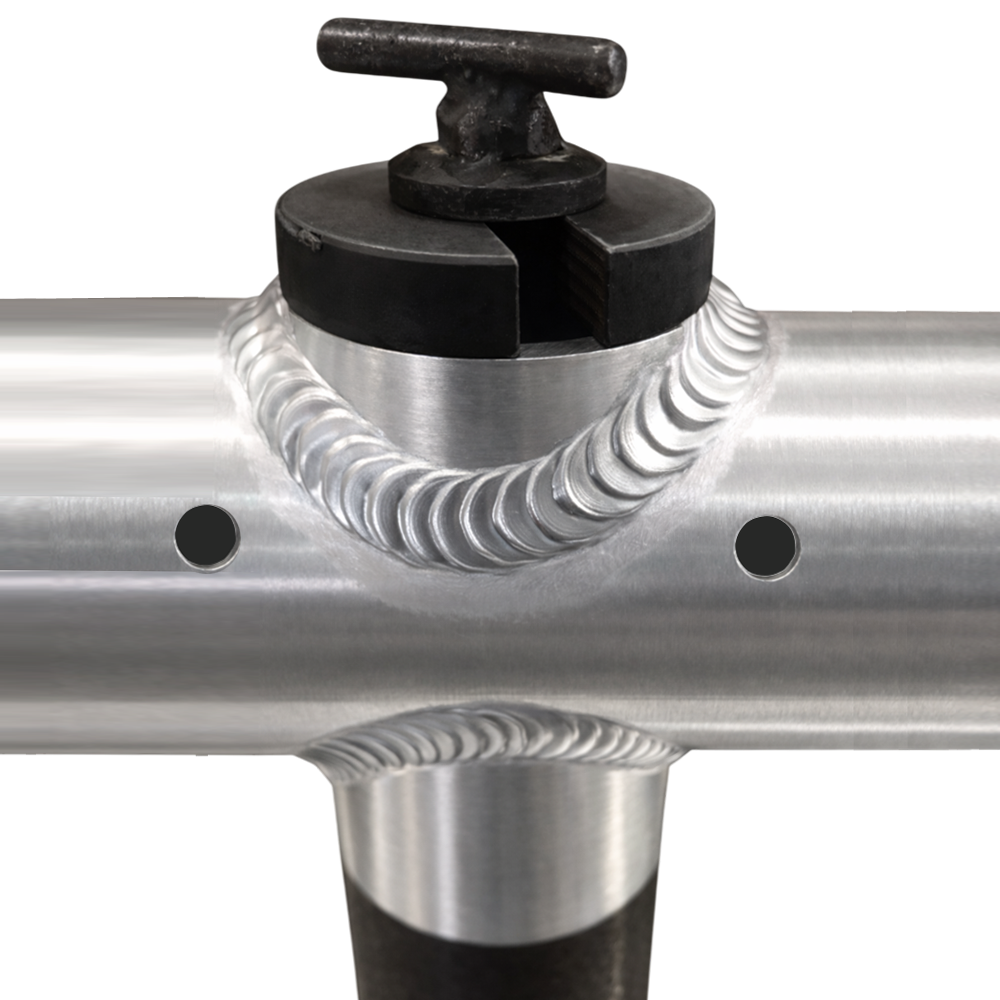
Start by defining what your project needs. If your frame requires strong, thick steel parts, MIG welding is usually best. It delivers deep penetration and high speed, ideal for heavy-duty frames. But if your frame uses thin aluminum or stainless steel, or if appearance matters, TIG welding fits better. It offers precise heat control, reducing warping and producing cleaner welds. Think about whether the weld will be visible or hidden under paint or coatings. Visible welds often call for TIG for its neat finish.
Your team's experience matters a lot. MIG welding is easier to learn because the wire feeds automatically. Operators mainly focus on torch angle and travel speed, making it suitable for beginners or large teams. TIG welding demands more skill. The welder must coordinate torch, filler rod, and heat control simultaneously. This usually means assigning TIG tasks to experienced welders. If your project needs many TIG welds, plan for training or hiring skilled operators to avoid quality issues.
MIG welding excels in speed. Its continuous wire feed lets welders cover long seams fast, perfect for high-volume or large frames. TIG welding is slower since filler rods feed manually, but it shines in precision. Use TIG when tight tolerances, minimal distortion, or aesthetic quality are critical. Sometimes, projects need both: MIG for internal structural seams to save time, TIG for visible edges needing a polished look.
MIG welding usually costs less per weld because it takes less time and requires less skilled labor. It’s efficient for big batches or thick parts. TIG welding involves higher labor costs due to slower speed and skill demands. However, TIG can reduce post-weld cleanup and rework, saving money on finishing. For cosmetic or thin metal parts, TIG’s upfront cost pays off by avoiding defects or distortion that cause scrap.
Many fabricators use both processes on the same frame. For example, they might MIG weld the main frame to build strength quickly, then TIG weld the outer faces or joints that show. This hybrid approach balances speed and quality, optimizing cost and appearance. It also lets you assign tasks based on welder skill. When designing your frame, consider where each welding method fits best and discuss this with your fabricator early on.
In automotive manufacturing, both TIG and MIG welding play vital roles. MIG welding is the backbone for chassis and frame assembly due to its speed and strong penetration. It handles thick steel components efficiently, enabling fast production lines. TIG welding is reserved for performance parts, exhaust systems, or aluminum components where appearance and heat control matter. For example, aluminum motorcycle frames often get TIG welded to avoid distortion and achieve a polished finish. This dual use maximizes both productivity and quality.
Aerospace demands impeccable weld quality and tight tolerances. TIG welding dominates here because it offers precise heat control and clean, spatter-free welds. Components made of aluminum, titanium, or exotic alloys rely on TIG to prevent thermal distortion and maintain structural integrity. For instance, aircraft fuselage panels and engine parts often use TIG welding for its fatigue resistance and cosmetic excellence. MIG welding appears less frequently, mainly on thicker structural elements where speed is less critical.
In heavy fabrication and construction, speed and strength are priorities. MIG welding is the preferred method for steel beams, support frames, and large assemblies. Its fast deposition rate and deep penetration make it ideal for load-bearing structures. TIG welding is rarely used here except for specialized joints or thin metal sections requiring precise control. For example, large steel bridges or heavy machinery frames almost always use MIG welding to meet tight deadlines and budget constraints.
For hobbyists and DIYers, MIG welding is often the first choice. It’s easier to learn, faster, and works well on common materials like mild steel. Beginners appreciate the continuous wire feed and forgiving nature of MIG. TIG welding appeals to more experienced hobbyists working on detailed projects like custom motorcycle frames, metal art, or thin aluminum parts. TIG’s clean welds and fine control enable superior aesthetics, though it demands more skill and patience.
Industry experts emphasize choosing the right process for the job rather than favoring one method exclusively. Many fabricators adopt a hybrid approach, using MIG for internal, structural welds and TIG for visible or thin material welds. This strategy balances cost, speed, and quality. Experts also highlight the importance of skilled operators and proper joint preparation to avoid defects regardless of the welding method. Case studies show that investing in TIG expertise can reduce rework and improve product lifespan in precision applications, while MIG’s automation capabilities drive volume production efficiently.
TIG welding offers precision and clean finishes, ideal for thin or visible frame parts. MIG welding excels in speed and strength, perfect for thick, heavy frames. Selecting the right process depends on material, project goals, and operator skill. Partnering with experienced professionals ensures quality and efficiency. Future trends include automation and advanced controls enhancing both methods. Huang Wei Techology Enterprise Co., Ltd. provides expert solutions and products that add value by optimizing welding performance for diverse fabrication needs.
Need Help Choosing the Right Welding Process?If you are unsure whether TIG or MIG welding is more suitable for your frame fabrication project, our engineering team can help you evaluate material type, structure requirements, and production efficiency to identify the most reliable solution. View Welding Capability & OEM Solutions |
A: TIG welding offers precise heat control and clean welds ideal for thin or exotic metals, while MIG welding provides faster, strong welds suited for thicker materials and high-volume projects.
A: TIG welding excels on thin aluminum with better heat control and appearance, whereas MIG welding suits thicker aluminum parts for speed but requires specialized equipment.
A: MIG welding is generally more cost-effective due to faster speed and easier training, while TIG welding involves higher labor and equipment costs but can reduce rework on precision parts.
A: Both face issues like incorrect settings and contamination, but TIG demands stricter joint cleanliness and skill, while MIG may produce more spatter needing cleanup.
A: Yes, combining MIG for structural welds and TIG for visible or thin sections balances speed, quality, and cost effectively.


